.png)
Koskela - Sustainable "Made in Australia" Furniture Subscription—Powered by circuly
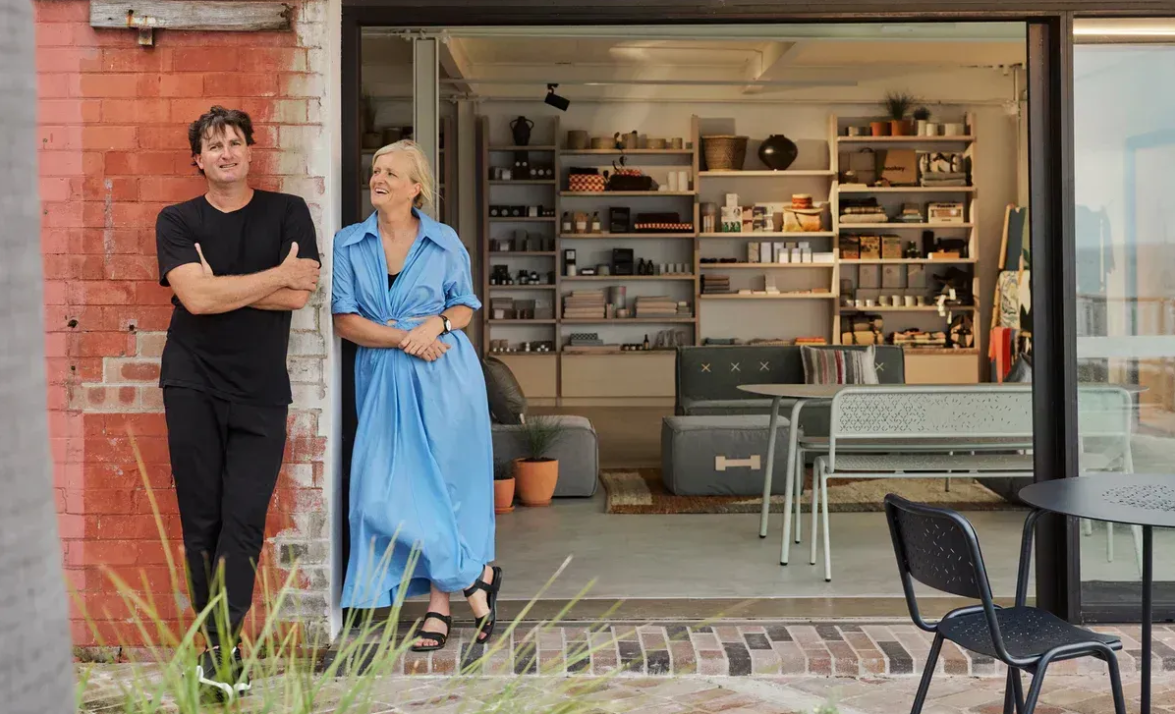
Koskela was founded in 2000 by Russel Koskela and Sasha Titchkosky who left their corporate careers to build a furniture and design company with a strong social conscience, one that would prove profits and ethics can go hand in hand.
More than two decades later, Koskela designs and makes furniture in Australia for workplaces, schools, universities and homes, under a simple idea it calls Designing for Good.
That idea shapes how the furniture is built. Koskela pieces are made to last, backed by a seven-year warranty, and designed to be repaired rather than replaced.
In 2017, Koskela became Australia's first furniture company to be certified as a B Corp. In its Circularity Action Plan, it went further and committed to becoming a fully circular business by 2027: nothing it makes should end up in landfill.
Keeping furniture out of landfill: Koskela's path to circularity
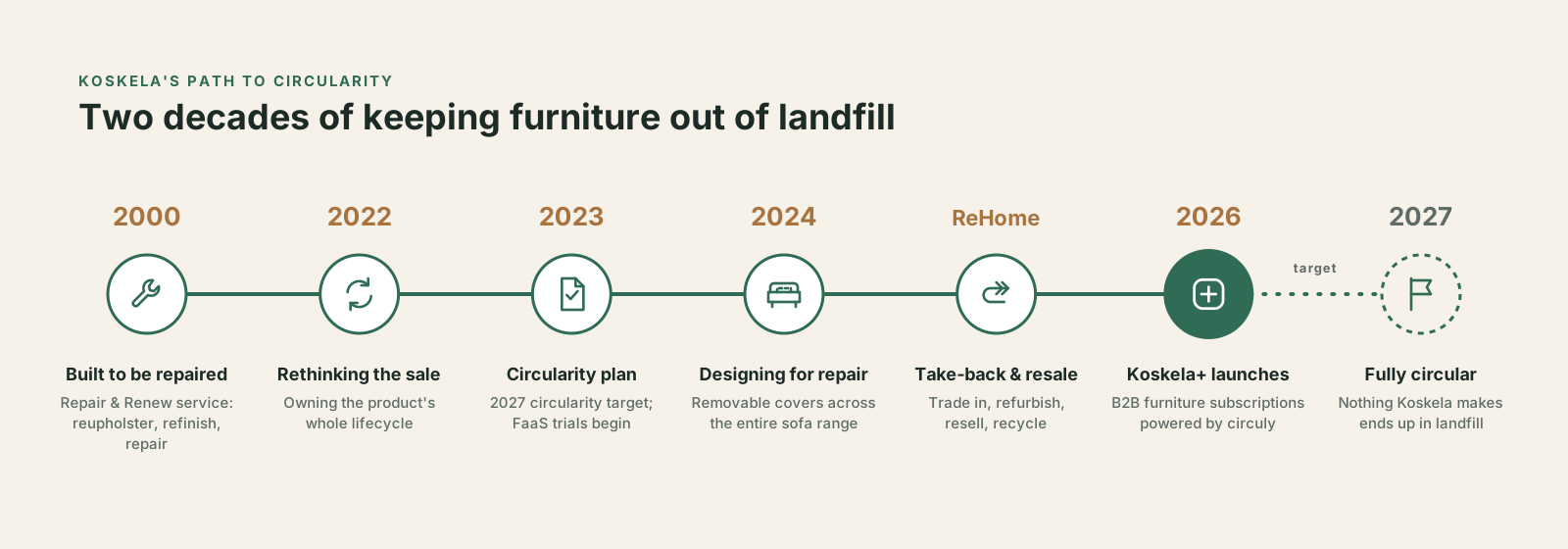
For Koskela, the 2027 target didn't come out of nowhere. It was the next step in something the company had been working towards for years.
- 2000 – Built to be repaired. From the start, Koskela designed furniture to last. Its Repair & Renew service reupholsters, refinishes and repairs pieces rather than replacing them. Some customers have kept the same Koskela sofa for 20 years.
- 2022 – Rethinking how furniture is sold. Co-founder and CEO Sasha Titchkosky talked publicly about taking responsibility for a product's whole lifecycle, not just the sale. She pointed to Patagonia as the model, and outlined plans to buy back, refurbish and resell Koskela pieces.
- 2023 – The Circularity Action Plan. Koskela published its first Circularity Action Plan and committed to becoming a fully circular business by 2027. The plan rests on three principles: eliminate waste, circulate products at their highest value, and regenerate natural systems. In the same year, Koskela began trialling Furniture-as-a-Service with its workplace and education clients.
- 2024 – Designing for repair. Every sofa in the range now has removable covers. Changing a cover instead of buying a new sofa cuts carbon by up to 83.9%.
- ReHome – Take-back and resale. Customers can trade in Koskela furniture of any age or condition for store credit of up to 30% of the retail price. Pieces are repaired and resold, and anything that can't be repaired is recycled.
- 2026 – Koskela+. The Furniture-as-a-Service trial became a full B2B offer.
What is Furniture-as-a-Service
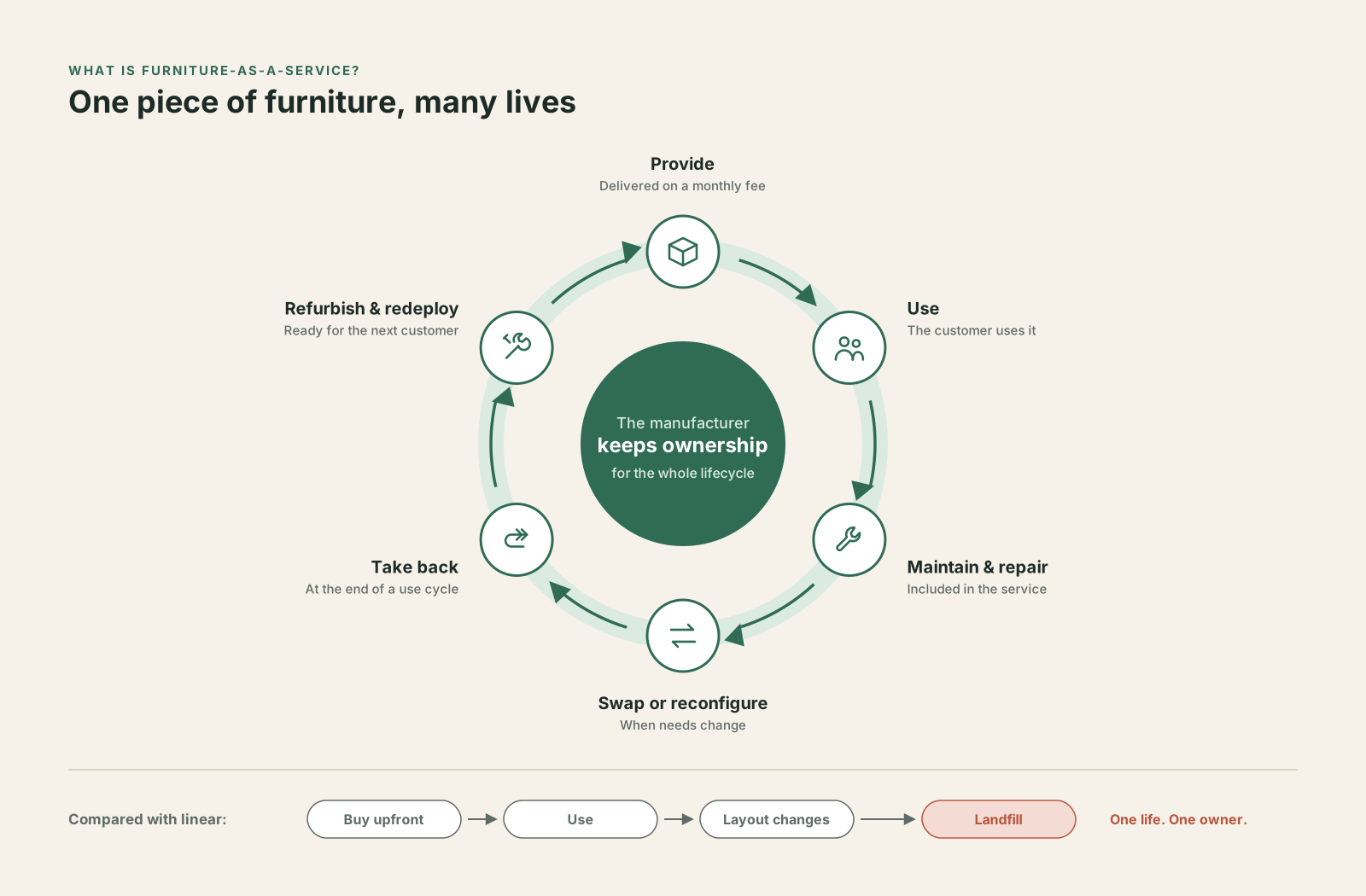
Furniture as a Service is a type of a circular buisness model. Instead of selling furniture, the manufacturer provides it on a subscription or service basis, and stays responsible for it for its whole life: providing it, maintaining it, refreshing it and eventually taking it back.
Typically, a Furniture-as-a-Service model includes:
- Recurring pricing instead of a one-off capital purchase
- Manufacturer ownership of every piece throughout its life
- Maintenance and repair as part of the service
- Flexibility to swap, add or reconfigure furniture as needs change
- Take-back and reuse at the end of each use cycle, so furniture goes back into circulation rather than to landfill
Furniture-as-a-Service at Koskela: Koskela+
In August 2026, Koskela launched Koskela+, its B2B Furniture-as-a-Service model. Business customers pay an agreed monthly fee instead of making a large upfront purchase. Koskela keeps ownership of every piece.
Koskela+ works in four stages:
- Plan. Koskela's designers work with the client on a layout built from Koskela's Australian-made range.
- Set up. The furniture is installed, and every piece is tagged with a QR code.
- Evolve. Regular check-ins keep the space in step with the business. Pieces can be swapped, repaired or reconfigured when needs change: a desk moves into a new layout, a sofa gets fresh covers, a room is reset for a new tenant.
- Take back and renew. At the end of a use cycle, furniture comes back to Koskela to be refurbished, placed with another client or remanufactured. Nothing is designed to be thrown away.
Koskela+ is built for the organisations whose spaces change most often:
- Workspaces and corporates
- Landlords and build-to-rent operators
- Spec suites and flexible workspaces
- Student accommodation and education
For these customers, ownership has always been a poor fit. Layouts change, tenants leave, and intakes come and go, while the furniture itself is usually still in good shape. Koskela+ gives them furniture that adapts, costs they can predict, and a supplier who stays responsible for every piece.
For Koskela, it closes the gap its earlier programmes couldn't. With ReHome, a piece came back only if the customer chose to return it. With Koskela+, every piece comes back to Koskela, and Koskela always knows where it is.
Koskela+ behind the scenes: The technology needed to run it
Selling a desk is one transaction. Running a desk as a service is a relationship that can last years, and one desk may go through several of them. Along the way it's delivered, billed, repaired, reconfigured, swapped, returned, refurbished and placed with someone new. Each step involves a customer, a contract, a payment, a physical asset and a job someone has to carry out.
Most business systems weren't built for this. ERPs, inventory tools and shop systems have been refined over decades for a one-way flow of goods: sell, ship, invoice, done. They're very good at that. But they don't understand subscriptions, and they lose sight of a product once it's sold.
Koskela didn't replace its systems to solve this. It brought in partners, each with one clear role.
Cin7: the inventory backbone
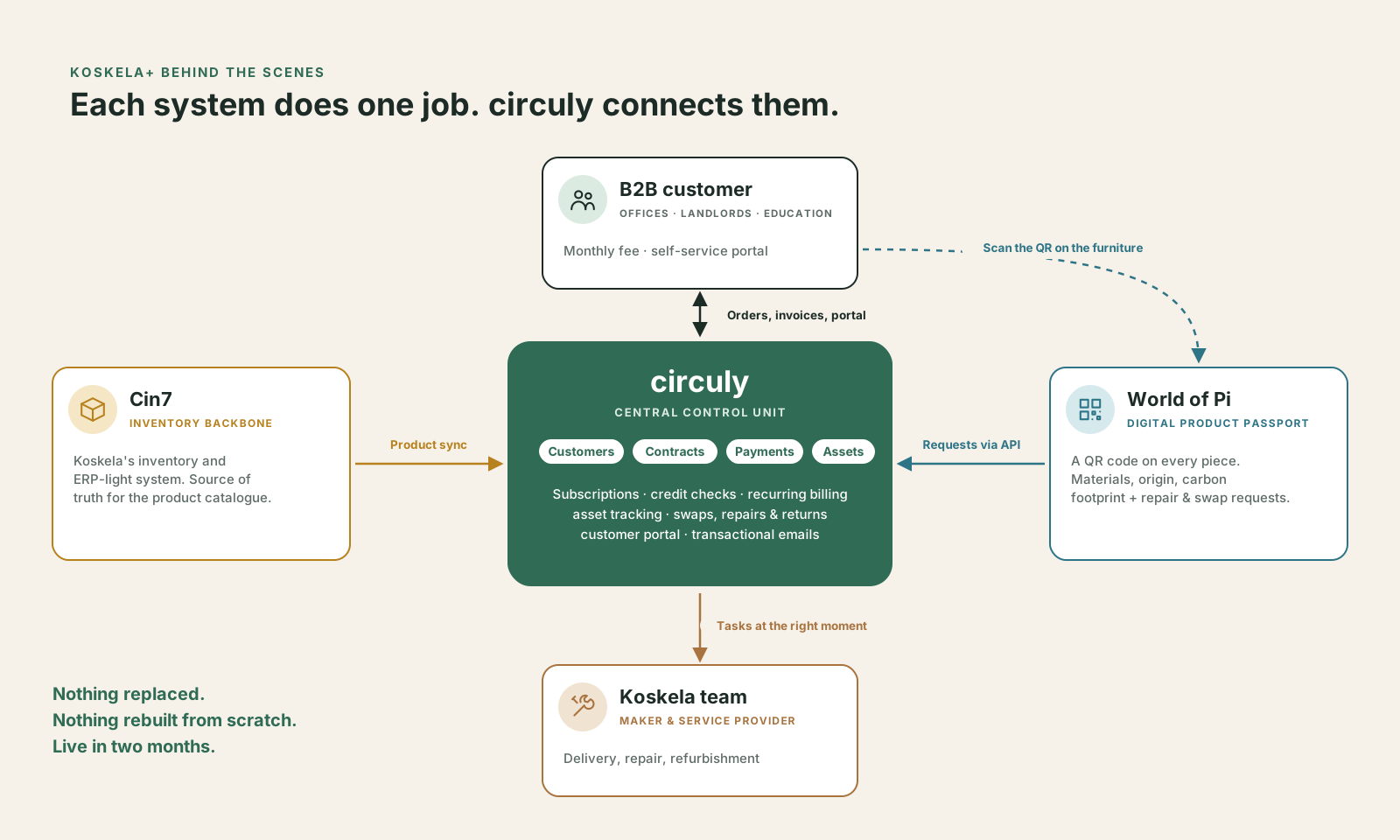
Cin7 is Koskela's inventory and ERP-light system. It connects suppliers, stock and sales channels. For Koskela+, it stays exactly what it was: the source of truth for the product catalogue. Products sync automatically from Cin7 into circuly, so the range is maintained in one place and nobody keys products in twice.
circuly: the central control unit
circuly is the subscription management platform that runs Koskela+. Its job isn't to replace Koskela's existing systems. It sits between them and makes them work for subscriptions and the circular flow of goods.
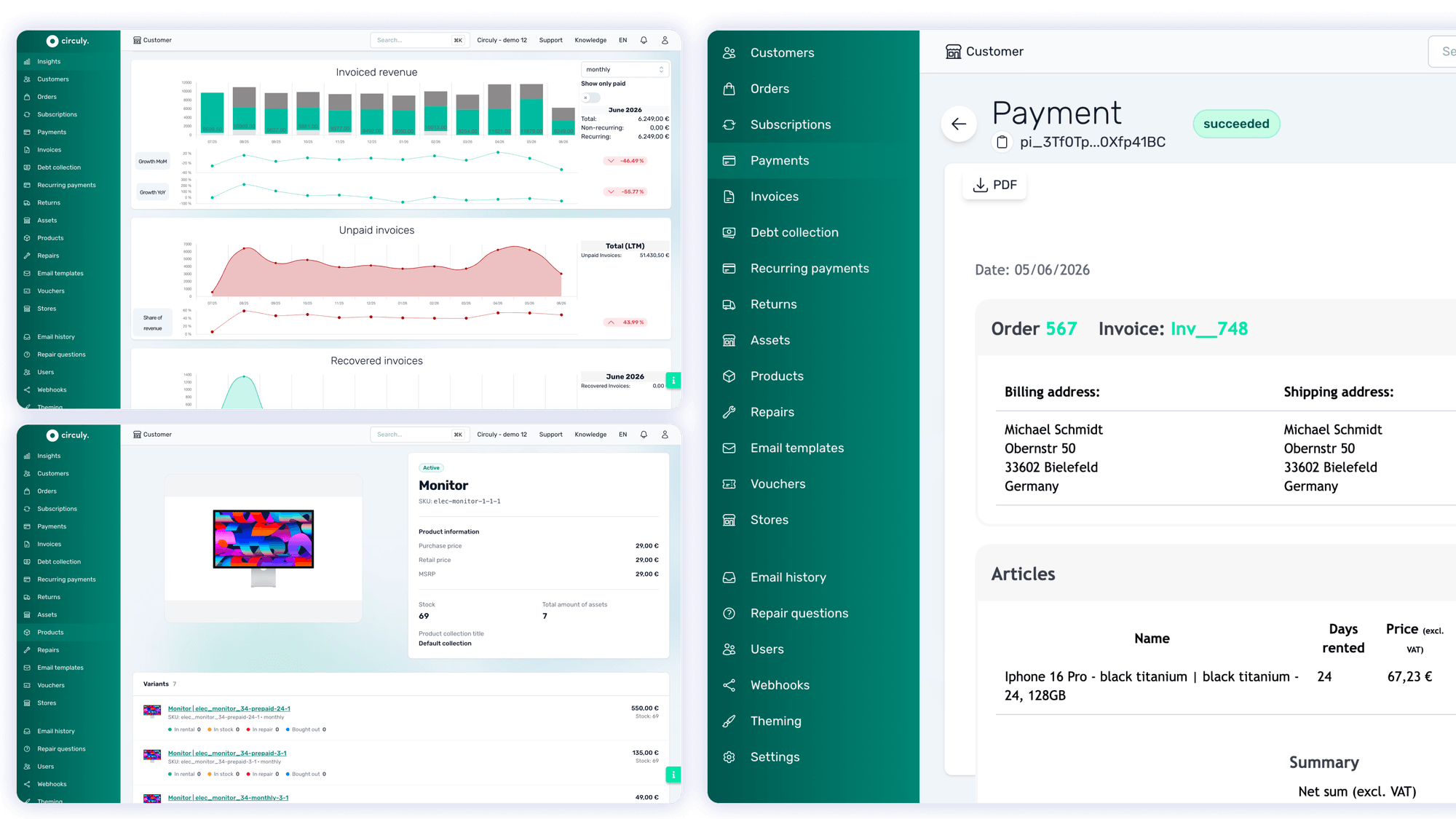
In circuly, the customer, the contract, the payment and each individual piece of furniture are connected:
- Orders and subscriptions are created directly in the backend through circuly.
- Credit checks run before a contract starts, since the furniture leaves the warehouse but stays Koskela's property.
- Recurring billing and invoicing run automatically, and overdue payments follow a defined debt collection process.
- Asset tracking follows every piece through its lifecycle: which customer has it, under which contract, and what has happened to it.
- Swaps, repairs and returns are handled as part of the existing subscription, not as new sales.
- A white-label customer portal lets customers manage their subscriptions and details themselves.
- Transactional emails go out at every recurring touchpoint.
When something needs to happen in the physical world, circuly prompts Koskela's existing systems and team to do it. Fulfilment still runs the way it always has.
World of Pi: the product's digital identity
World of Pi is a Zürich-based company building smart product passports. Its aim is to give every product a digital voice, and to make it more profitable for manufacturers to keep durable products in use than to make new, short-lived ones. That's the same belief Koskela was founded on.
.avif)
For Koskela+, World of Pi built the digital product passport.
Every piece carries a QR code linked to its own passport, which holds its materials, origin and environmental impact, including its carbon footprint.
World of Pi also built the interface people see when they scan. From there, anyone using the furniture can start a repair or swap request in a few taps.
The request goes straight into circuly through its API, already linked to the right asset, customer and contract.
A sold product only needs a label. A product that stays in circulation needs an identity, and that's what World of Pi provides.
Meet desk #0427
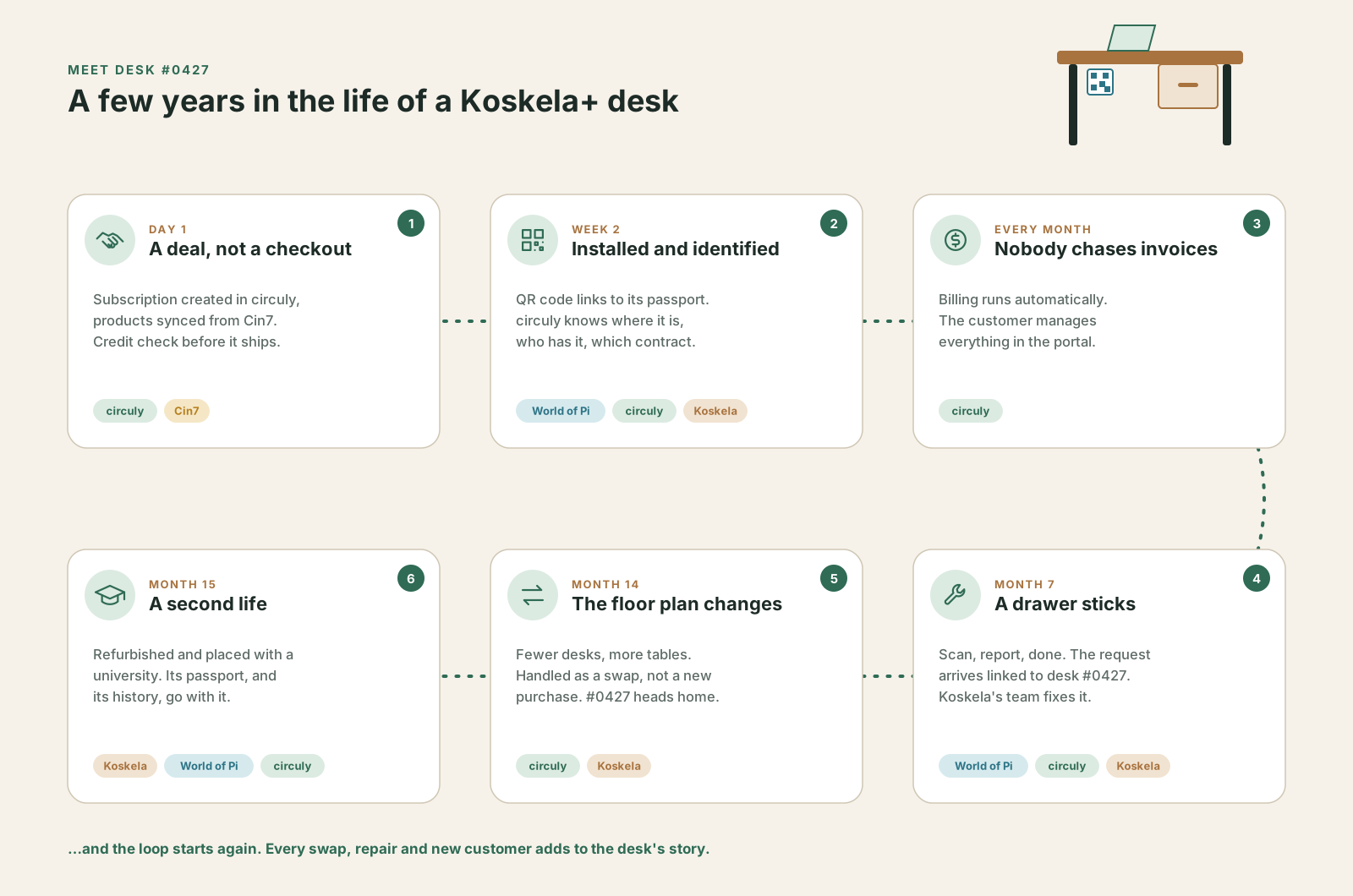
To see how the pieces fit together, follow one desk (let's call it #0427) through a few years of Koskela+.
Day 1: A deal, not a checkout. A flexible workspace operator signs up for a Koskela+ fitout. Koskela's team creates the subscription in circuly, using products synced from Cin7. A credit check runs before anything ships.
Week 2: Installed and identified. The desk is installed. Its QR code links to its World of Pi passport, and circuly records exactly where it is, who has it and under which contract.
Every month: Nobody chases invoices. Billing runs automatically. The customer manages the account in the self-service portal.
Month 7: A drawer sticks. The person at the desk scans the QR code and reports the problem. The request reaches circuly already linked to desk #0427. Koskela's team knows which piece it is and what has happened to it before, and goes out to fix it.
Month 14: The floor plan changes. The operator needs fewer desks and more collaboration tables. That's handled as a swap within the subscription, with no new purchase order and nothing sent to landfill. Desk #0427 goes back to Koskela.
Month 15: A second life. Koskela refurbishes the desk and places it with a university on a new contract. Its passport goes with it, so the new user can see its story, and Koskela knows its full history.
Why this setup works
Each system does the job it's best at. Cin7 manages inventory. World of Pi gives every piece an identity and a way to act on it. circuly runs the service and connects everything. Koskela focuses on making and caring for the furniture.
Nothing was rebuilt from scratch, and nobody had to learn a new way of working. Koskela went from onboarding to launch in two months. What it gained is visibility it never had while selling furniture: at any moment, it can see where every piece is, who's using it, what condition it's in and what it has been through.
Conclusion: a promise with a system behind it
When Russel Koskela and Sasha Titchkosky started Koskela in 2000, they set out to show that good design and good business can go together. At circuly we're also trying to tell the same story, that is, sustainability & profitability can also go hand in hand.
Koskela+ keeps Koskela responsible for every piece it makes. circuly runs the service behind it: the subscriptions, the billing, the assets and the processes that connect them. World of Pi gives every piece an identity that goes with it from customer to customer. Together, they turn circularity from an intention into how the business runs day to day.
The biggest lesson is how the two ideas at the centre of Koskela+ strengthen each other. A subscription keeps the furniture in circulation, and the digital product passport records everything that happens while it's there. The longer a Koskela piece stays in use, the more its passport has to say.
That story is still being written. As more furniture goes into service, comes back and goes out again, the collaboration between Koskela, World of Pi and circuly will keep developing, and Koskela is already looking at circuly's point of sale to create subscription orders directly in showrooms and sales conversations. The 2027 deadline is getting closer, and Koskela now has the systems in place to meet it.
Thinking about moving your products from a single sale to a service? Talk to circuly about building the operations behind a circular business model.
.png)
.png)
.png)

%2520(1).png)